Pinoy Cooking, other Food Recipes

Subscribe to FREE Recipes

Search For Recipes here

 
Web pinoy food


Site menu:

Join Cuisinera Club

cuisinera club
Join Cuisinera Club and get free recipes and a chance to join monthly cooking demos. I will be there too so it's a chance to meet each other,

Ads


I support Takbong Pangarap. No limit to the Filipino spirit.

Want the cheapest airplane fares to the Philippines? Searching for cheap international airfare anywhere in the world? Try our Pinoy Travel Booking Engine. Book your airplane tickets here.
Home & Living - Top Blogs Philippines
Maribago Bluewater Beach Resort

Categories

Noche Buena Dishes

Recent Posts

Recent Comments

Pinoy Food Guests

My Other Blogs

Tags

Archives

Twitter Updates

    follow me on Twitter

    Meta

    Categories +/-

    Archive +/-

    Links +/-

    Meta +/-


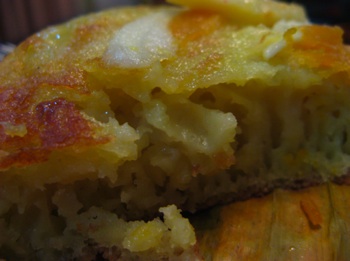
    Special Bibingka

    I already wrote before on the history of Bibingka in my mom’s bake shop. Mom, my sister and I often helped with the experiments to come out with the best bibingka recipe. Here is Bibingka Especial, one of these Bibingka variations which originally came from “Recipes of the Philippines” by Enriqueta David-Perez, 1973 printed edition:

    Ingredients

    1 cup thick galapong (see procedure on “How to Make Galapong” below)
    1/2 cup white sugar
    2 tsps. baking powder
    2 tbsps. melted butter (My mom used regular hydrogenated margarine, out of a tub)
    4 tbsps. sugar for topping
    3 eggs, well-beaten
    1 cup coconut milk
    3 tbsps. grated cheese (Mom used Magnolia or Kraft processed yellow cheese; I’m more partial to using goat cheese and salted duck’s eggs)

    To make galapong bigas:

    1. Soak rice in equal amounts of water overnight or a minimum of 4 hours.

    2.Grind in a food processor or meat grinder starting with small quantity, adding soaked rice little by little until it produces the consistency of light dough.

    3. Let stand until the next day

    For the bibingka:

    1. Add sugar to the galapong.

    2. Add baking powder, melted butter, and the well-beaten eggs and coconut milk. Mix well.

    3. Pour a thin layer of this batter into a hot (native clay) baking pan or molds lined with banana leaves (which has previously been passed over an open flame, to soften the fibers).

    4. Cover each baking dish with a galvanized iron sheet with live embers on it. (or Bake in a pre-heated hot oven (375 F) until golden brown)

    5. When almost cooked, sprinkle grated cheese and sugar on top of each — and cover again. Continue baking until brown; brush top of bibingka with melted butter and serve hot with grated coconut.

    Note: If you want a more waxy, chewy “feel” to the bibingka, try mixing malagkit rice to make the galapong. For example, try the ratio of 1/4 cup malagkit rice to 3/4 cup regular rice.


    Related Posts

    You can also get FREE recipes in your email by subscribing below:

    Enter your email address:

    Delivered by FeedBurner


    You might also want to join Cuisinera Club and get free recipes and a chance to join monthly cooking demos. I will be there too so it's a chance to meet each other.

    Copyright Notice: You may use my recipes for your PERSONAL USE. No part of this entry (whether photos, images, opinions or recipes ) may be used in your magazine, website, blog , news article or in any manner whatsover without the owner's written permission.

    If you enjoyed this post, then make sure you  Subscribe to my RSS FEED.

    RSS feed | Trackback URI

    13 Comments »

    Comment by grace cabarrus
    2008-01-29 09:22:34

    enjoy ur blog,very helpful in trying new recipies for a change

     
    Comment by Rose
    2008-08-08 12:35:46

    Wow…I’ve never tried to cook bibingka and I didn’t know that it could be this easy. I love our native sweets and snacks compared to celebrated foreign ones and your blog is lovely. More power and hope to learn more from you.

     
    Comment by dirg
    2008-11-01 08:47:21

    can I ask what is the use of the baking powder in cooking bibingka?
    thanks!

    Comment by thess yuson Subscribed to comments via email
    2008-12-11 21:03:08

    hi, your using baking powder to this recipe to become fluffy.god bless!

    http://ofwfoodetc.blogspot.com/


    Comment by thess yuson Subscribed to comments via email
    2008-12-11 21:09:09

    thanks for the recipe,its real yummy! ganda ng blog mo, and more power to your site!

    http://ofwfoodetc.blogspot.com/

     
    Comment by Lita
    2009-01-16 22:45:09

    Could you please add on how to cook this bibingka version in an oven with the degrees and number of minutes. Recipe looks good but these are things we need to know when we don’t have a bibingka machine.

     
    Comment by Maria
    2009-02-12 03:10:12

    I hope this is not too late to get a response. I’m sooo interested in making Filipino treats but I’m always stumped by the ingredients. What is galapong? is that sticky rice, or regular rice. I live in Canada and I was surprised to find a huge variety of rice available here because there are so many ethnic groups around. So choosing the right kind of rice would be helpful.

    Also – i have to ask, why use baking powder as a leavener? What did our ancestors use before baking powder was invented?

    I also plan to create a charcoal oven, – the kind with an earthen bottom and also a hot plate with charcoal on top. It’s kind of like a dutch oven.

    Maria

    Comment by noemi
    2009-03-04 21:31:46

    you can remove the baking powder. The galapong bigas aids in the rising of the rice cakes.


    Comment by Bianca del Gallego Subscribed to comments via email
    2009-05-20 18:27:29

    Hi there, my friends and I are having Filipino breakfast this weekend and I am making the brave attempt to make try this special bibingka recipe. I have a few questions below

    1) rice flour – this is about the only rice flour I could find in London – http://www.thai-food-online.co.uk/shopping/shopexd.asp?id=142&bc=no. This is the non-sticky version. Would this be suitable?

    2) “Rice” for galapong bigas – is this ordinary rice?

    3) Could I use a regular oven rather than a traditional clay pot?

    Bianca

     
    Comment by noemi
    2009-05-20 19:16:48

    1. Yes the non-sticky version rice will do

    2. Yes ordinary rice

    3. You can use traditional oven. Bake in a pre-heated hot oven (375 F). Just watch until the top reaches golden brown. Sorry forgot how many minutes.

    happy baking!

     
    Comment by redtagblogger Subscribed to comments via email
    2009-08-18 10:00:26

    hi,

    i’d like to know how you can make the bibingka softer just like with bibingkinitan bibingka available in malls?

    thanks.

     
    Comment by Jan
    2009-09-14 01:13:13

    I heard from old folks before that one of the ingredients of native bibingka, especially those baked & sold in far flung barangays in the philippines, is the “tuba” – a fresh Tuba is sweet and not intoxicating, unless it is or has been fermented- as the main leavening agent and not the baking powder. I guess this is the reason, plus the native way of baking in earthen ovens where firewoods are used thus creating a signature tatse & smell, that makes it difficult to duplicate now-a-days.
    In the meantime, I’m gonna try ur recipe ‘coz I think its pretty close to the old way of making it, especially using the galapong. cheers!

     
    Comment by Josua
    2009-10-11 07:40:18

    Tuba is used as alternative to baking in our place but too much tuba will give the bibingka a not so nice smell.

    Old folks here just “estimates” the tuba that’s why sometimes they put too much tuba, especially if they drink tuba first before cooking :)
    Josua´s last blog ..Maja Blanca Maiz (corn) My ComLuv Profile

     
    Name (required)
    E-mail (required - never shown publicly)
    URI
    Subscribe to comments via email
    Your Comment (smaller size | larger size)
    You may use <a href="" title=""> <abbr title=""> <acronym title=""> <b> <blockquote cite=""> <cite> <code> <del datetime=""> <em> <i> <q cite=""> <strike> <strong> in your comment.
    CommentLuv Enabled

    Trackback responses to this post